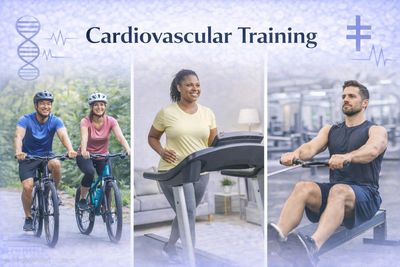
There are many different ways to exercise, and not every style suits every person. Have a look through the options below — you may need to try a few before you find what you enjoy.
Always check with your medical team before increasing activity levels, especially after illness, injury or treatment.
Start slowly, build gradually and stop if you experience chest pain, dizziness, severe breathlessness or feel unwell.
Cardio has been used for centuries in different forms, from walking long distances and manual labour to structured endurance training used by athletes and the military. Over time, it has become recognised as one of the most important types of exercise for overall health and wellbeing.
Cardiovascular training helps improve the health of your heart, lungs and circulation. It can improve stamina, energy levels and recovery, while also helping with breathlessness, fatigue, blood pressure and blood sugar control. Many people find that cardio can also help improve mood, sleep, confidence and mental wellbeing.
One of the benefits of cardiovascular training is that it can be adapted to suit almost anyone. Some people may start with a short walk, gentle cycling or a few minutes on a treadmill. Others may prefer rowing, swimming or more structured exercise sessions. It can be done indoors, outdoors, at home, in a gym or in a group.
Progression is usually simple and gradual. This could include:
• Increasing the distance
• Increasing the time
• Increasing the speed slightly
• Increasing the resistance level
• Reducing rest periods
• Exercising more regularly
For example, someone may begin with a 5 minute walk, then gradually build to 10 or 15 minutes. A treadmill session may start slowly with gentle walking before progressing to a faster pace or a slight incline. Cycling and rowing can also be made more challenging by increasing resistance or duration.
There are many different styles of cardiovascular training. Steady paced exercise is useful for building endurance and confidence, while interval training involves alternating between easier and harder efforts. More advanced styles, such as HIIT, combine short bursts of harder work with recovery periods.
The most important thing is to choose a type of cardio that feels enjoyable and manageable. Starting small and staying consistent is often more important than intensity.